My Third Month Learning Spanish
At the end of February 2024, I flew from Chengdu to Mexico via San Francisco ✈️. I had originally planned to spend six months traveling south 🗺️, from Mexico through Guatemala and Peru to Argentina. But after staying in Mexico City for a while, I fell in love with this sunny, tree-lined, warm, and friendly city for reasons I cannot quite explain. In the end, my travel plan became a four-month Spanish-learning plan 🗒️. I wanted to go from zero to a level where I could freely read novels and listen to podcasts in Spanish in four months.
The focuses of my third month:
- Vocabulary: This month I read more than ten Spanish storybooks (despite the number, half were booklets of around fifty pages). They included six storybooks for learners, three children’s books for native speakers, and two Mexican elementary-school textbooks. At the same time, I memorized the notes I had made while reading every day.
- Listening: I watched YouTube learning videos with subtitles. Partway through, I gave up the boring teaching videos and began watching a series of street interviews.
- Grammar: I attended classes at the Center for the Teaching of Foreigners at UNAM. From Monday to Friday, I had four and a half hours of class each day, where the teacher guided us through repeated practice with exercises, dialogues, essays, and listening activities using past-tense and future-tense conjugations, object pronouns, and reflexive verbs.
Here are the materials I used in my third month that I highly recommend:
- A foreign-language learning guide recommended by Reddit’s language-learning community: It answers questions about every aspect of learning a foreign language and provides useful guidance for listening, speaking, reading, writing, and breaking through beginner, intermediate, and advanced plateaus.
- A book list recommended by Reddit’s Spanish community: It has two sections, one for learners and one for native speakers, with each section graded by difficulty. I picked four books at random and liked all of them. I read two booklets for learners: Las tres pruebas (A2, 66 pages) and Elena (B2, 31 pages; the vocabulary was not difficult, yet it told a gripping story reminiscent of The Da Vinci Code). I also read two novels for beginning native speakers from the La casa del árbol series. They are like the Adventure Tiger books: light, fun, and around fifty pages each.
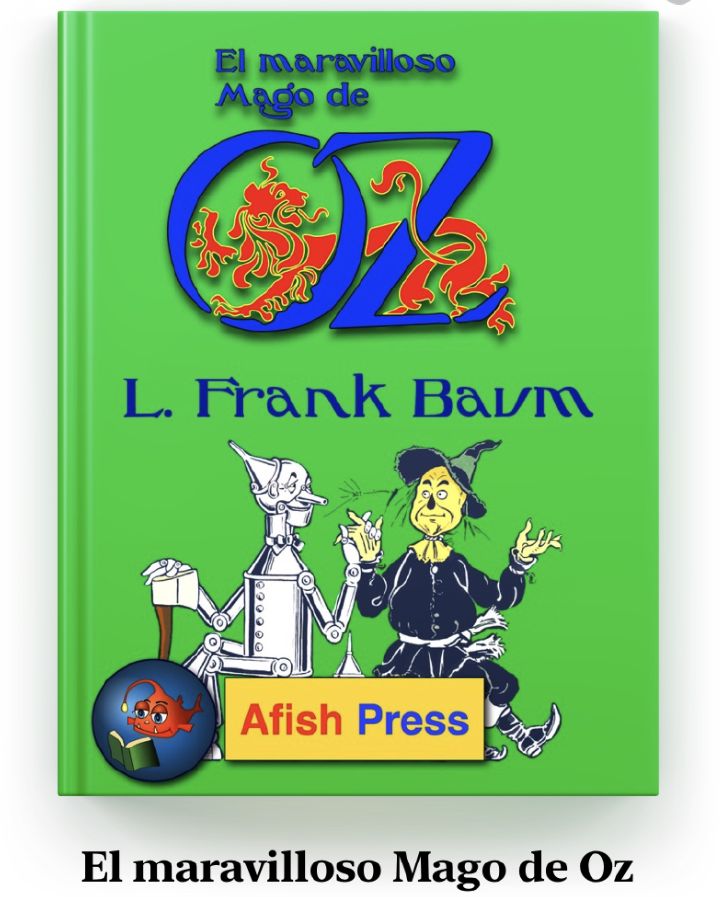
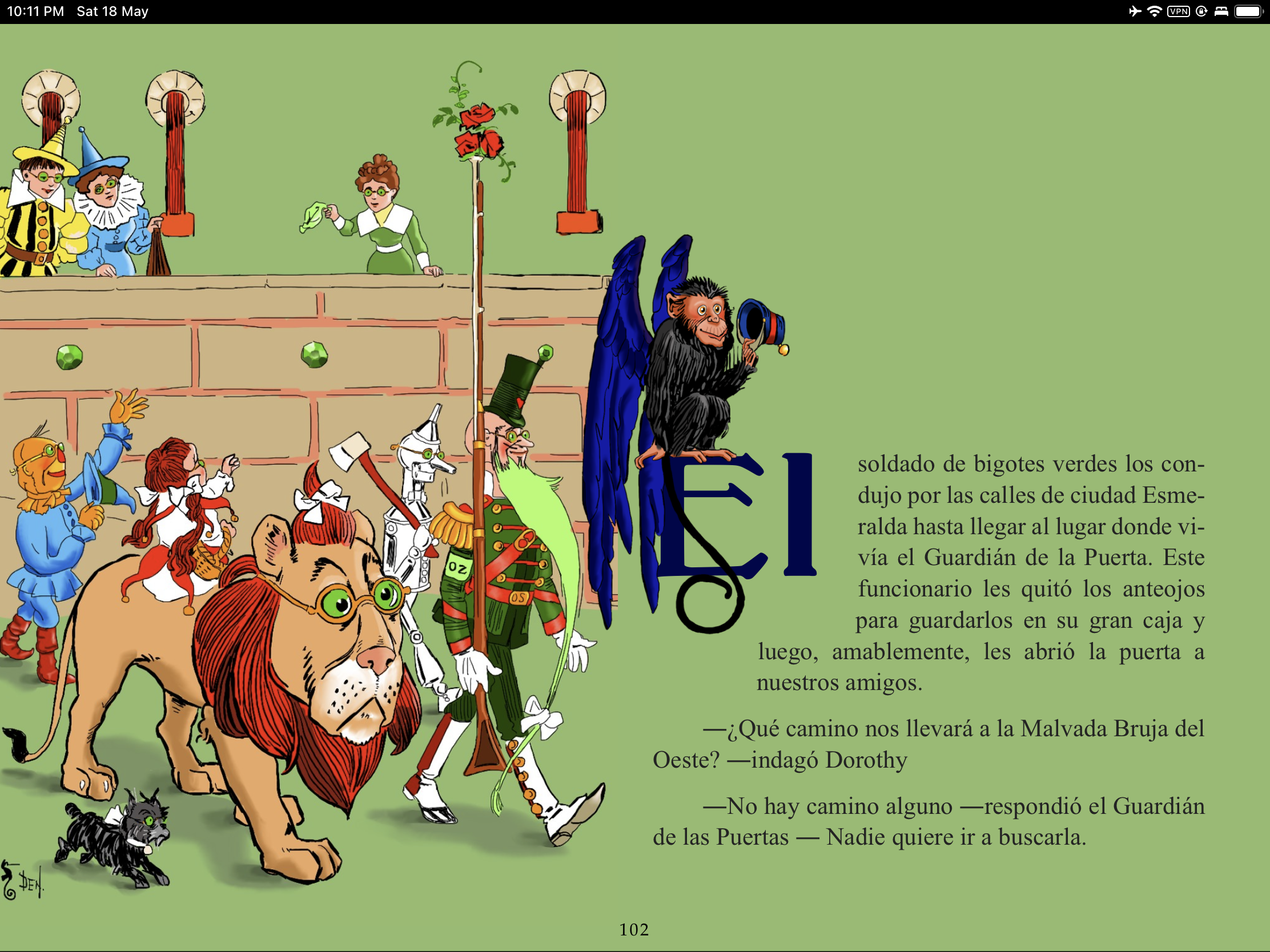
- El maravilloso mago de Oz: The Spanish translation of the classic fairy tale The Wonderful Wizard of Oz. My English teacher Via first recommended it to me while I was learning English in the Philippines, saying it was her favorite English story. I never expected that I would end up reading its Spanish version. I love this story; although it is a fairy tale, it contains interesting philosophy.
- The Daily Spanish Listening app: I used it for intensive listening to the Spanish podcast Charlas Hispanas. It has transcripts, can follow the sentence currently being played, and lets you long-press to look up unfamiliar words automatically.
- Easy Spanish: A YouTube channel of street interviews. It exposes you to many Spanish accents, including those from Latin American countries and Spain, and includes bilingual Spanish-English subtitles. I mainly used it for extensive listening on topics that interested me. I recommend the Mexico series, which is spoken a little more slowly.
- Mexican elementary-school textbooks: Textbooks for Mexican primary-school pupils, available in the conaliteg digital app. Their strengths are varied subjects and beautiful illustrations, covering everything from preventing tooth decay and what to do during an earthquake to famous Mexican paintings, Mexican folk customs, musical notation, and stories about small animals. Their drawbacks are a lot of unfamiliar vocabulary and a high reading difficulty.
My study plan for next month:
- Build vocabulary by reading stories: Read children’s books and young-adult books for native speakers
- Practice listening: Listen intensively to Charlas Hispanas and extensively to Easy Spanish
- Practice speaking: Attend the school’s Wednesday tea gathering and seize opportunities to speak Spanish
P.S. Foreign-Language Learning Theory
The theory section in my first month introduced the two most important things in foreign-language learning: having enough enjoyment to drive you and spending enough time immersed in the language. In my second month, I introduced some tips for building vocabulary through reading. This month, I will share my method for reviewing notes.
During the first two months, I mainly used the Spanish Assistant app to record and review unfamiliar words. The problem was that it did not record meanings precisely enough and was inconvenient for recording related words and phrases. So in the third month, I returned to paper and pen to record unfamiliar words and phrases from my reading, and used the Ebbinghaus forgetting curve to review my notes. I call this method the Ebbinghaus Note-Review Method.
- Number the pages of a notebook;
- Make an Excel spreadsheet for the Ebbinghaus forgetting curve. After studying the content for a numbered entry, enter its number in the first column and enter the study date. The spreadsheet automatically calculates the dates 1, 3, 7, 15, 30, and 90 days later in the same row as review dates;
- Every night before bed, review all entries in the spreadsheet whose dates fall on or before that day.
If you do not want to use an Excel spreadsheet, there are also many related mobile apps. I use Anki.
Author Harold Gao
LastMod May 31, 2024